Showing posts with label Multi-Medium. Show all posts

Saturday

Something new and different


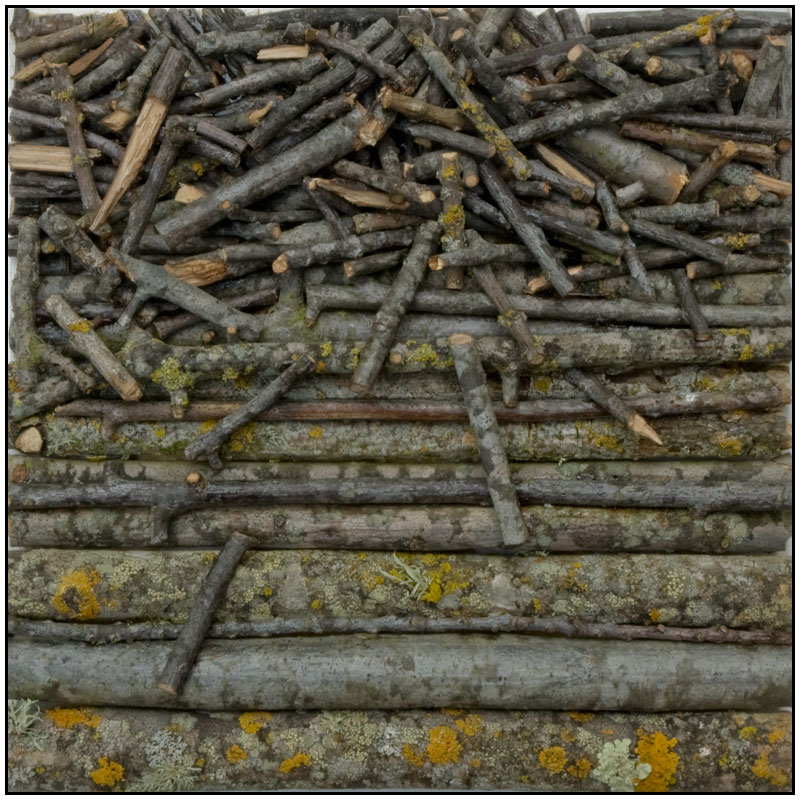
As an artist we are always searching for way to reinterpret our visions and as I have always been in love with textures, I too have been searching for ways to interpret and apply the texture I discover in the form of a painting.

So while gardening, trimming a tree and cutting all the branches down to fit in the fireplace, I looked at the pile of wood on the ground, my imagination began to run wild.

After collecting enough pieces of twigs and branches to fill a ten gallon bucket, I felt I had an abundant amount that were size appropriate for use on a canvas to begin the project. Using tweezers and medium gel, each piece of wood is carefully positioned in place until the desired effect is achieved and here are the results . . . 


Holz vor den Schuppen (Enough wood in front of the shed), 8 x 8 inches


Log jam, 8 x 8 inches


Beaver’s dam, 8 x 8 inches


Thank you for your visit
and comment . . .

Egmont


White on White


White on White
 MM-O/C 36x48” (91.44 x 121.92 cm)


After an almost two year absence from painting, I finally held a paint brush in my hand, inhaled the scent of oil paint and Liquin as if they were rare perfumes. It has taken almost this long to also solve a technical issue with which I was faced trying to emulate the series “Typography Graveyard,” the Berkeley telephone poles with their remnants of torn paper fliers.


In a 2009 post ,“A discovery turns into an artistic vision,” there are samples of art works, were collage material and painting are combined in order to duplicate the visual experiences. Now I wanted to take the art to the next level, beyond “Howl” or “Beauty Re-defined,” which are both flat, absent of any light or shadow play and recreate the micro-structure on a larger scale, including adding shapes to the surface. “White on White” is the result of that quest.


Thank you for your visit
and comment . . .

Egmont


Monday

German reunification twenty years later


I remember following the news for almost four weeks with great intensity as East Germans were successfully escaping to the west and when the Brandenburg Tor opened on September 11, 1989, it signaled the end of a divided Germany. I wanted to fly to Berlin, taking my son with me and for us to be part of the history in the making. However Armont was only one year, a month, and three days old at the time when the fall of the Berlin Wall was marked officially down on November 9, 1989. To personally mark the event, I started a 36 x 36 inch painting, which for me represents my own beginning as an artist, even though it would take another ten years before I would pick up my brushes again, and seriously returned to the profession of painting.


The Berlin Wall – Section 276, January 17, 1990
Multi-Medium on canvas, 36 x 36 inches (91.44 x 91.44 cm)


The abstract painting noting the fall of the Berlin Wall is one of the few canvases that were created spontaneously, reaching for whatever paints and art materials I had on hand. Using acrylic house paint, model craft spray paint, children’s crayons and of course oil paint, I went at the canvas as if lead by a mysterious hand guiding me through the various stages and the multiple layers until it was completed. In the end The Berlin Wall – Section 276 also represents what I encountered in 1974, when standing before the wall for the first time.


I grew up in the shadows of the Berlin Wall as construction started August 13, 1961 while living in Southern Germany, attending a private boarding school until my return to Californian the following year. I found myself in Berlin nine years later attending the HFBK as a guest and once more in 1974, when I decided to take a train through East Germany rather than flying to Berlin.


 My East German passport stamps


The train ride took several hours, stopping at most towns along the way. During our trip into the DDR, our train was boarded by East German soldiers with submachine weaponry and remained posted at each end of the compartment until we reached the West Berlin border. We were also treated to East German propaganda, handed out by the DDR Cultural Ministry personnel upon our first stop after entering East Germany. The experience is one I am grateful for, despite the lapses in memory which is also weak on a number of other points, especially the details of what the landscaped looked like, other than empty.


I still have a number of those booklets and smaller pamphlets that were handed out that day. They are in some box that have not been opened since they were packed when I moved out of my San Francisco apartment to get married some twenty-two years ago. I did find my out-of-date passport, turning to the page the East German border control stamped my arrival, departure into their land. With the subsequent arrival and departure stamps on the same page a few days later, as I returned to the West the same way I had left, with a long train ride though East Germany.


The Berlin Wall remained closed until September 11, 1989, six months later on March 10, 1990 Germany reunification took place.


Postscript:
At Four Seasons in a Life you can see photographs of the remaining Berlin Wall and it's refurbishing by the original 86 international artists in time for the celebration to mark twenty years since its downfall.


Wednesday

A discovery turns into an artistic vision


Over a period of three years I have photographed the telephone poles in the city of Berkeley, California, because over time fliers of advertisements are transformed into remnants of paper tidbits to which I am drawn because of their abstract nature.


As new fliers are stapled to the poles, old ones are torn off, leaving behind fragments held in place by which they were fastened. It is these snippets of randomness that have evolved from just being a captured photographic image, by becoming an artistic vision, a concept that is replicated on canvas or on a wooden pallet.


The eye that sees you, 2006


By not only gathering photographic evidence but also actual source material from telephone poles and from billboards, especially walls that were plastered with posters; larger pieces of art could now considered possible.


HOWL, 2008

Multi-Medium on canvas, 36 x 36 inches (91.44 x 91.44 cm)


The transitional period from working with just representational photographs to actually attempting a painting or a collage painting occurred in stages that continued for almost four years, beginning with HOWL, a painting which took 2½ years to complete.


Just before HOWLwas finished, another canvas was started, using materials torn from billboards in Berkeley and Emeryville and applied in a more graphic design application, rather then using the embodiment approach as with Orderly Confusion.


Beauty Re-defined, 2008

Multi-Medium on canvas, 24 x 24 inches (60.96 x 60.96 cm)


The key distinction between the first two paintings lies in the usage of the collage material as being the initial surface upon which the painting is build and the word ‘BEAUTY’ is spray painted on. In comparison to HOWL, the illusion of torn materials were first painted, then newsprint was adhered to, only to be torn off, before adding the local newspaper covers simulating posters.


Before HOWL was considered completed, the first four lines from Allen Ginsberg’s 1956 poem Howl were added, bringing together the social implications of the newspaper image and purpose of the painting to which it had evolved into. Though Beauty Re-defined was also finished with a handwritten commentary, it however reflects graffiti by the hand of a stranger.


Orderly Confusion, 2008

Multi-Medium on canvas, 10 x 10 inches (25.40 x 25.40 cm)


The smallest of the painting in this genre series also represents the truest forms of embodiment textural qualities of the telephone poles one finds in Berkeley. In order to achieve true embodiment and visual authenticity, an integral part of this collage painting, actual pieces of ephemeral material were collected from telephone poles I had photographed, along with various rusted and almost new staples and then reassembled in a design of my choosing. Paying careful attention to duplicating reality, any painterly evidence had been carefully disguised as not to draw immediate attention to it.


So far each piece of art has had its own individual approach, interpreting how to define what had been seen and photographed and Pangaea is no different, despite its much cleaner and highly refined graphic layout.


Pangaea

Multi-Medium on wooden pallet, 24 x 36 inches (60.96 x 91.44 cm)


The materials used came from telephone poles, billboards, and a large number of posters that had been plastered on walls at a number of different construction sites and were carefully torn from these locations with the intent of using only specific pieces of interest from the actual posters.


Since no other materials other than the collected pieces of papers had being used, careful attention was being paid to the interaction of each piece and its overall placement in the composition as a whole. Making sure that visual movement and points of key interest was given with no more and no less of attention then the piece next to it, even though one item by far outshined all others and remains the main focal point in the composition.


There are plans for a few more collage paintings, especially one very large endeavor, measuring 4 x 6 feet (121.92x182.88 cm) in size and utilizing source material and paint.